The Bookshelf, The Parlor, The Young Texas Reader, and the Monthly

The Texas Bookshelf is different from the The Texas Parlor, http://texasparlor.blogspot.com/ . The Texas Parlor carries "general" bookish information and non-book information and even different Texana news and notes of use to the bibliographically challenged and other nosey folks intersted in historical, literary, and cultural observations. Will's Texana Monthly may carry material from either blog, but extends itself beyond those, especially for longer compilations or treatments. The Monthly, the Bookshelf and the Parlor are all companions. So, is the Young Texas Reader http://youngtexasreader.blogspot.com/ which specialized on books and such things for the youngest to the teenagers.

Monday, September 28, 2009

Will's Texana Youtube Channel

 
I've developed a Youtube channel, Will's Texana Youtube Channel.  It's free, It's easy.  An account is called a channel.
Yes, I know and groan about the junk and ephemera that's there, but this last summer I wondered, just what IS there?  So I looked.  It took a while to get the hang of it all, but using a very undisciplined method which was also very unconsistent, I cobbled together 1,000 videos from other folks' channels and centralized them into 100 topical playlists
 
There are some drawbacks (e.g., Youtube doesn't allow for alphabetizing the 100 playlists, so you'll find them in a jumble of 100.)  I working on a means where by they can be alphabetizing on somebody's separate page, and this alternative would also enable the addition of other folks' playlists on other channels.
I'm issuing a report on Will's Texana Youtube Channel as a special issue of my Will's Texana Monthly.  If you'd like a free copy just let me know.  That report also includes a list of the 50 or so Youtube channels to which I subscribe, some rather professionally done - historical, contemporary, nature, gardening, media, etc - and some casually produced by individuals but worthy of notice and maybe your own subscription.
 
The WT Channel was first intended just as a device to record what I found.  Now it serves as a repository (if temporary) to nudge librarians, archivists, historians, teachers, and other interested folks to further explore Youtube and other video repositories for their long-term value.  Already one WT channel viewer, Joan Hood, has since begun her own channel, Joan's Texas Women Channel, to collect videos exclusively on that topic which I wouldn't be able to do as well at http://www.youtube.com/user/JoanHood1 .
 
Actually, I encourage you to start your own channel, if not so much to produce your own videos, but to collect along special lines.
 
And tell me where to go and what to do when I get there!  It's a broad prairie with only slow rolling hills.  I could use some talk and thought.
 
See the whole shebang at http://www.youtube.com/willstexana

Monday, September 21, 2009

New Guide to Spanish and Mexican Land Grants in South Texas - Greaser

NEW GUIDE TO SPANISH AND MEXICAN LAND GRANTS IN SOUTH TEXASNEW GUIDE TO SPANISH AND MEXICAN LAND GRANTS IN SOUTH TEXAS.  Author and Compiler,  Galen D. Greaser.  Austin: General Land Office, Archives and Records, 2009.  3rd edition
343 Pgs., 8 &1/2 x 11, paperback.
In the 1970's Virginia Taylor compiled the Index to Spanish and Mexican Land Grants as a "quick reference" to trans-Nueces lands, and she revised it in the 1980's as Guide to Spanish and Mexcian Land Grants in South Texas.  Greaser, the much valued Translator and Curator of the GLO Spanish Collection, here offers a revised and significantly expanded version of that title. 
Therein he corrects and augments Taylor's entries, and he adds a substantial historical essay of 149 pages.  He also adds some appendices.  He also adds a glossary, a FAQ list, and a bibliography.  Some figures, maps, and illustration are new.  Land Commissioner Jerry Patterson relates in his foreword "The purpose of this 'New Guide' is to provide to all ready access to pertinent facts about the rich history of early land settlement in South Texas, yet another piece of the diverse mosaic of Texas land."
Each of the 363 grant entries is arranged by name of the recipient and usually described by its place, size, county, and abstract citation.  Following such are the nature of the title, a place of its common citation, its more recent confirmation, governmental patent of transferral, GLO file number, and occasionally other sources and notes.
Readers new to the topic will readily recognize via Greaser's historical essay that some background information is essential to commanding the field of knowledge, including his own essay.  The essay covers the Villas del Norte, the porcion grants relaled to the Visita General of 1767 (including Laredo, Hacienda de Dolores, Revilla, Lugar de Mier, Camargo, and Reynosa), the larger land grants of 1777-1800, Royal policy reforms of 1802-1812, the troubled times of the revolution years of 1810-1821, the stance of independent Mexico, the laws and grants of Tamaulipas, the troubles following the Texas Revolution and the Mexican American War, and certain confirmations.  All of which is deeply documented.  Readers should be patient with pencil and paper at hand.
The appendices cover topics including Andres Bautista, Jose Manuel Pereda, Jose Francisco Balli, salt and mineral rights, and certain points of Mexican law.
The glossary is particularly useful.  For example, a "Porcion" is an "Allotment of land; long-lot tracts of land, most along the river, granted to settlers of the towns established by Jose de Escandon...."
Public inquiry into this field will certainly increase over the years as Spanish land heritage becomes more popular.  This volume should be very widely available in libraries and historians' offices across the state.

ABC's of De - Robertson

 
The ABCs of De: A Primer on Everette Lee DeGolyer, 1886-1956. By Herb Robertson.  Dallas: SMU De Golyer Library, 2007. 195 pp. softcover, $15.00
 
To those in the petroleum industry De Golyer was a the scholar, the man who knew.  His awards and accolades from that industry will not likely be eclipsed.  But to those outside the industry, he's known for his bookish interests, hence his Everette Lee De Golyer Library at Southern Methodist University and his collections at numerous other institutions.  SMU describes their institution:   "The DeGolyer Library is the principal repository at SMU for special collections in the humanities, the history of business, and the history of science and technology. Its rare books, manuscripts, photographs, maps, and other materials are available to all SMU students, faculty, visiting scholars, and other researchers. DeGolyer Library's holdings of primary sources are supported by exhibitions, lectures, publications, and seminars. Dedicated to enhancing scholarship and teaching at SMU, the DeGolyer Library is charged with maintaining and building its various collections 'for study, research, and pleasure.' " http://smu.edu/CUL/degolyer/
 
Herb Robertson, also an oilman, was fascinated with "De" or "Mr. De" and Roberson has spent years pouring over DeGolyer's own collection, testing the depths and characteristics of the giant.  This primer is one result of Robertson's inquiry.  The primer is a type of eclectic encyclopedia through which portions of DeGolyer's life and times may be pursued by the reader.
Mr. De was international.  Check the entries for Dean Acheson, Dwight Eisenhower, Franklin Roosevelt, Lazcaro Cardenas.  He ran with the Texas wildcatters; see Glenn McCarthy and Clint Murchison.  He touched and developed world petroleum views; see ARAMCO, Texaco, Royal Dutch.  He listened to Texas bookers; check Tom Lea, Dillon Anderson, Herbert Gambrell, Frank Dobie, Carl Hertzog, and Yankee Norman Cousins too!
Mr. De could convers equally on the Big Inch, the 1913 Seige of Tampico, the Mexican Expropriation of 1938, Creekology, Loose Thinking, Seismology, and Salt Domes.  From those he could turn and hold court on CASI, chili con carne, Joe Cooper, jalapenos, tortillas, and Stanley Marcus.
Among all this he took the time to write The Elements of the Petroleum Industry, such a simple title.
What else would you expect?  Even romantic love? see Gateswinger.
If you never met the man, as I never did, these entries are fascinating.

Huntsville by Littlejohn

Huntsville      Huntsville.  By Jeff Littlejohn and the Walker County Historical Commission. Charleston, SC:  Arcadia Publishing, 2009. 128 pages, b & w photographs, ISBN 9780738571331, $21.99. http://www.arcadiapublishing.com/
 
Jeff Littlejohn teaches history at Sam Houston State University. He, James Patton, the Commission, the Arts Commission, the Sam Houston Memorial Museum, and the Thomason Archives have produced a delightful and diverse work.
The city is as old as the Republic of Texas.  Sam Houston found favor with the city's Walker County and had three homes there - in the forests and the urban cluster.  The place was a place of rich agricultural endeavor as the early African American population could well attest.   The spires and castellated towers of the churches demonstrate the well organized spiritual life.  Structures of Sam Houston State University and the Texas Department of Criminal Justice stand in mute testimony to the drives for education and civil obedience, both of which have served to enhance community abundance.
The two most interesting photos are the 1930 aerial view of the college and the several images of the prison facilities.  The Dairy Queen life of the 1950's reminds this viewer of the lesser juvenile crimes contemplated in Marshall in the same time period.  The sawmill shots recall the more modern images recalled while in Texas and Alaska working for college money. 
All in all, a well-produced work - balanced and insightful, if restrained.

Dumas by George

 
Dumas     Dumas.  By Louise Carroll George.  Charleston, SC: Arcadia Publishing, 2009. 128 pages, b & w photographs, paperback.  ISBN: 9780738570617. $21.99.
 
In the middle of the volume is a 2-page spread showing the background mountains around Dumas.  I visited Dumas in 1979 while working at the nearby Amarillo Public Library, and I do not remember mountains.  There are none.  The "mountains" in question are the awesome, high, and dark clouds of dust that rolled into town April 14, 1935 as one of the worst dust storms of the Dust Bowl.  What must have rolled through the first-hand viewers at the time can only be considered worthy of Hollywood disaster scenes.  But the photograph stands in testament.
We can thank Louise Carroll George for concerting this photo history of Dumas, Texas and its surroundings.  George has presented the area's history before in No City Limits and Some of My Heroes are Ladies.  The ladies on the front-cover no doubt had their own say in public in the 1910's because one of them was Cara May McKee, editor of the early Moore County Pioneer newspaper.
The most remarkable thing about Dumas' first decade was its abandonment three times before the glue held tight.  The over-200 photos collected by George cover the Alibates quarries, the Antelope Creek people of 800 years ago, Adobe Walls, on up to Goodnight and Bugbee, freighting, and the scarce population and flat land in that farming and ranching village that enjoyed an occasional boom from the oil and fields.  One of my favorite's is on page 50 featuring a windmill, an water tower and tank, and the courthouse for its sheer genuine honesty.  The more modern images reflect, flapppers, leather-headed footballers, early cars and airplanes, local refineries, World War warriors about to leave, business and retail settings.  Should you need proof, George provides graphic documentation of coyotes, roughnecks, harvesters, blizzards, and tumblweeds - much of which is likely in the Killgore Memorial Library, also included in Dumas.

Monday, July 20, 2009

Art of Making Money - Kersten

So you're in Dallas and were hit by the economic blast and didn't get a bailout.   Maybe you should read the new non-fiction by Jason Kersten.  It's reviewed the Dallas Morning News by Michael Young.  It's  The Art of Making Money, the story of a master counterfeiter.

The review begins:
"When his father abandoned the family, the future was pretty well set for Art Williams, a smart, ambitious kid growing up in the tough projects of Chicago's South Side.
With his dad's criminal background already ingrained in him, and his Texas-born mom's bipolar disorder leaving her largely unable to provide for her children, Art looked around at the success stories in his neighborhood, powerful figures in ethnic mobs, and decided that crime was the only way out."
 

Escape by Jessop

A review by Becky Holmes in her " A Book a Week" section of the Daily Page blog escapes into cyperspace.
 
Escape by Carolyn Jessop, with Laura Palmer
         The review begins:  " I don't usually read books about the issue du jour, if you know what I mean. For some reason, however, I was attracted to Escape by Carolyn Jessop, who escaped from the FLDS, the fundamentalist polygamous cult that was recently raided by the Texas authorities for alleged child abuse."

Saturday, July 11, 2009

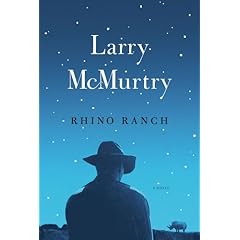
Rhino Ranch - McMurtry

Rhino Ranch by Larry McMurtry is reviewed in Publishers Weekly Fiction Book Reviews: 6/22/2009
Rhino Ranch: A NovelThe review begins "McMurtry ends the west Texas saga of Duane Moore, begun in 1966 with The Last Picture Show, with a top-shelf blend of wit and insight, sharply defined characters and to-the-point prose. Duane, now in his late 60s, is a prosperous and retired widower, lonely in his hometown of Thalia, Tex."
Yes, Duane is back, and he's smitten by a rhino.  Go figure.  Read more at http://www.publishersweekly.com/article/CA6665994.html?industryid=47159

Black Water Rising - Locke

"This Thriller's Cold War is Racial," a review  By CHARLES McGRATH
Published: July 1, 2009 in the New York Times
Review begins:  "Attica Locke's first novel, "Black Water Rising," which Janet Maslin called "subtle and compelling" in The New York Times, is an even better book than its author had in mind. "I intended to just write a slick little thriller," Ms. Locke said last week, stopping in New York at the end of a book tour before heading home to Los Angeles. "But then my unconscious led me to the soul of the book, and it got a lot better."   READ more at http://www.nytimes.com/2009/07/02/books/02locke.html?em
 

Dallas Morinig News Disturbs Torpor

Those Dallas Morning News folks just can't let a hammock- sleeping Texan sway in the sweltering heat.  Now they've gone and disturbed the "Great Book Cannon."  In the OPINION BLOG Editor Keven Ann Willey, in her July 17 commentary on the Big Rich, stumbles off behind the altar and decides to ask if folks really like the relics left behind by the sancrosanct Texas writers.  She asked, "What's the best book about Texas in your opinion and what makes it so good?"  Yes, friends and neighbors, she got replies.
 
 
DMN staff chimed in with their recommendations.  Even the unwashed public, who apparently still read, caressed their keyboards mentioning their druthers.
But not one mentioned William Goyen, one of our finest who delicately fingered his way across the ghosts and neurons of your mind.

Wednesday, June 17, 2009

Strong Enough to Die - Land

   The San Jose Mercury News carried a collection of book reviewlets by Myles Knap on Grit Lit.  One novel by Jon Land is about Caitlan, the first woman Texas Ranger.  Now there's an iconoclastic topic.
 

Tuesday, June 16, 2009

Quarantined - McKinney

Macabre Musings: QUARANTINED by Joe McKinney Joe McKinney's Quarantined novel is set in San Antonio.  A pandemic is stretching its boney fingers.
 
Read more, if you dare, in the Fear Zone

Quest for Justice - Payne

Si Dunn at the Dallas Morning News reviews Quest for Justice: Louis A. BedfordJr.  and the Struggle for Equal Rights in Texas  by Darwin Payne.
 

Monday, June 15, 2009

Dead Reckoning - Smith

Sylvia Dickey Smith's new detective novel Dead Reckoning is treated in "Blogger News" at http://www.bloggernews.net/121211.  The protagonist is moving on from her role as a pastor's wife to a licensed private detective.  Some may say it's merely a title change. Follow Sidra Smart in her southeast Texas exploits.
 
Also read an "Armchair Interview" with Smith on her novel, Deadly Sins Deadly Secrets at


Tuesday, May 12, 2009

Come Rain, Come Shine - Bedell

 Come Rain, Come Shine. By Jack B. Bedell.  Huntsville:  Texas Review Press, 2006.  59 pages, 5 ½ x 8 ½ , ISBN 1-881515-86-9 $16.00 (cloth and jacket);  ISBN 1-881515-87-6  $12.00 (paper)  http://www.shsu.edu/~www_trp/


Bedell teaches English at Southeastern Louisiana University, where he edits Louisiana Literature and directs the Louisiana Literature Press.  The volume reflects the Cajun exotic and mysterious world of French patois, frogs, turtles, herons, handfishing, batfishing, Jean Lafite and dancing at Fred's.  Yet the lines are quite approachable by all. There are lines we all wish to breathe, as in "L'avalasse," "Inside, my wife, and boys draw close / and breathe with such peace the house almost glows."  And other lines we all fear, as in "Dear Heron," "It startles me to find it pinned to barbed wire / on the edge of some pasture

Myths of Electricity - Meaux

The Texas Review Press, over at Sam Houston State University, runs a pretty good line of books, not all of which are Texas themed.  Here are two tinged with Louisiana.  Their distribution is through the TAMU Consortium http://www.tamu.edu/upress/TR/trgen.html


 Myths of Electricity.  By Kevin Meaux. Huntsville:  Texas Review Press, 2005.  40 pp. 5 1/2x8 ½,  paper, ISBN 1-881515-73-7   $8.95  http://www.shsu.edu/~www_trp/


Meaux, born and educated in the Pelican State, took the occasion to cross the Sabine and to teach at Lamar University in Beaumont.   This volume, like Come Rain, dwells on the rural nature and person.  The poet writes with respect and a playful, exploratory mind.  He mixes for you here snakes, ghosts, abandonment, magic, omens, prayers, and immortality.  Some lines could be made in East Texas, as in "On visiting a Childhood Home," "As always, the summer unreels into wisteria / and dense clumps of honeysuckle, enthralling the backyard bees."  And some lines could end anywhere, as in "Hymn for Abandoned Things," "And whatever's neglected / will inherit the hushed corners of the kingdom, / as winds alone compose the low hymns / for all that's tarnished and born again among the weeds."

Three Perfect Men - Palfrey

   Three Perfect Men.  By Evelyn Palfrey.  Austin:  Moon Child Books, 1996, 4th printing, 2004.  333 pages, trade paperback, ISBN 0-9654190-0-2, $12.95.  http://www.evelynpalfrey.com/ 


Evelyn Palfrey, a successful novelist of Texarkana, writes as a middle-aged, ahem, "marvelously mature," observer of East Texas.  Angela, a lawyer/analyst, has been done wrong by a man in Houston.  Her best friends, Eleanor, an arch feminist/publisher and Sondra, a Judge and mother, swoop her off in the RV to a secluded lake for some days of quiet RR&R.  But there are at least three men, Jones, Ike, and Donnell, there!  But are they really perfect?  But who cares, really?

A murder victim washes ashore.  The usually self-contained women scream, shoot at the neighbors, drop lures and reject the men's lines and bobbers. The ensuing mystery provides a plot-line of small town politics and drug-trade, with twists and surprises, while the novelist performs the more intriguing task of revealing each of the sextet's personages, each with a secret wound only a true love can heal.

Three Perfect is the first of a trilogy of three college roommates, 25 years later.  The next two are The Price of Passion, and Dangerous Dilemmas via Simon & Schuster.  Palfrey's contribution to East Texana fiction draw from her nativity, SMU and UT Law School education, and, one presumes, some natural feminine wiles acquired by life.  Readers beyond the Pine Pale will enjoy her tales representing a fuller range of life in the trees in this pluralist social ménage.


German Settlement of the Hill Country - Morgenthaler


    The German Settlement of the Texas Hill Country.  By Jefferson Morgenthaler.  Boerne:  Mockingbird Books, 2007. 214 pages, notes, bibliography, index, softbound, 6" x 9", ISBN 978-1-932801-09-5  http://mockingbirdbooks.com $18.95


A quick survey of the volume may lead the awkward reader to some conclusions with some inaccuracy.  For instance, as the Holy Roman Empire dissipated and left the Germans feeling inadequate, the French revolted with all those weird ideas of freedom, leaving the German wishing for enlightened despots.  They found one named Sam Houston who offered them fishing rights on the upper Llano River. 

So several hundred Germans invaded at Matagorda Bay, drove up the Guadalupe River, tried to settle in at the designated locale, found they'd been "baited" with good advertising to a harsh land with loud neighbors (the Comanche just wouldn't abide by the neighborhood association's deed restrictions), "switched" to preferred locales, established New Braunfels, Fredericksburg, Boerne, Sisterdale, and Comfort, did rather well, even with a few Freethinkers along the way, found themselves beset by ruffians who wished to force acceptance of slavery and rebellion against the Union, got into a serious dust-up on the Nueces followed by a massacre, emerged from the scrapes, did rather well, and now populate the Texas Hill Country, finding freedom, education, democracy, and assimilation into Texan culture quite okay, thank you.

A calmer survey reveals Morgenthaler has strung together readable chapters of the 1840s-1860's successful colonization lead by a few German aristocrats via their Adelsverein organization, and their usually more common Germans.  Morgenthaler goes beyond the usual stories of Prince Carl of Solms-Braunfels, Fredinand Roemer, John Musenbach, and Henry Fisher.  He gets under the Fachwerk housing, reads the Neu-Braunfelser Zeitung, and mixes with the Fortiers, the Forty-eighters, and Fourierists.

Folks will find many tales of their early families tucked into the story as evidence.


Lillie Davenport - Midkiff

 Book 1   Lillie Davenport:  Pioneer Mother.  By Mary Lou Midkiff, with a foreword by Elmer Kelton.  Midland:  Oleo Publishing, 2008.  320 pages, endpaper maps, many photos, hardback with jacket, $29.95    ISBN-10: 0976395517  ISBN-13: 978-0976395515 http://oleopublishing.com


If Elmer Kelton likes it, well, it's pretty good read.  This grassroots family story is about Lillie (1877-1972), a Georgian woman in Indian Territory who in 1896 marries a cowboy Oscar Midkiff.  Yes, they had cowboys there.  They moved to south of Midland, and she raised twelve children out there on the plains, and as needed, she did it all, including shooting antelope from sidesaddle. 

Life for the Davenports was sparse because that's the way it was and still is around Midland.  Family readers will enjoy the many asides and recollections of the Davenport children and grandchildren.   And the story has a fine final plot line – after WWII oil was discovered on the Davenport land.   The volume has what its all family members will enjoy, about 200 photos, almost a hundred pages of genealogy, and a stunning index, mostly personal names.  A good sturdy volume of a good sturdy family.

The author knows some about the Midkiff's because she earlier wrote Midkiff: A Texas Family, Town, and Way of Life which covers much of the Midkiff couple's early life.


Texas Eccentrics - Kuhn

       Texas Eccentrics.  By John Kuhn. Art by Dennis Menese.  Dallas:  Atriad, 2008.  272 pages, paperback, copious illustrations, $19.95 ISBN: 1-933177-12-8

http://www.texaseccentrics.com/  http://atriadpress.com


John Kuhn is a founding co-editor of Fear and Trembling Magazine.  His book's funny, quirky.  Demonstrate how easily you can transition from your urbane, sedate lifestyle.  Spruce up your conversation with references to over 100 eccentric Texans.  And the categories are "Bizarre Businesspeople" with Jeff Bezos, Howard Hughes, H.L. Hunt, etc., "Peculiar Politicians" with Judge Roy Bean, Kinky Friedman, Ron Paul, etc., "Strange Sports Figures" with Mark Cuban, George Foreman, Dennis Rodman, etc., "Atypical Artists" with Gatemouth Brown, Janis Joplin, Anna Nichol Smith, etc., and "Other Oddballs" with Boxcar Willie, Wrong Way Corrigan, Carlos Esparza, Wolfman Jack, etc.  And more you don't know, unless you're already kinda strange.

Or get the book for the kids, especially the normal kids.  Each quick bio is headed by notes on the person's name, life dates, Texas connection, occupation, claim to weirdness, and the person's place in the Tex-centricity scale.  Kuhn's volume is an enjoyable light and easy read.  Get one for the neighbors; yes, you know which ones!

See some of Kuhn's other publications at